Effective chess practice is evidenced by a child’s ability to recognize tactical patterns quickly and apply learned techniques to common game positions. Parents should also look for signs of improved time management and the consistent achievement of specific goals set during training sessions.
Watching your child spend hours on a chess server can leave you wondering if they are actually improving or simply going through the motions. While a digital rating provides a quick snapshot, it often fails to capture the nuanced growth of a young player. For parents in Kingston, understanding the difference between repetitive play and deliberate practice is essential for long term development. Without clear benchmarks, it is easy for a child to hit a plateau that leads to frustration or even burnout. In this guide, we will explore how to identify qualitative behavioral shifts, technical improvements, and the right balance of consistency at home. You will also learn how to use local tournament performance as a reliable metric for success and receive a ten point checklist to evaluate your child’s current progress effectively.
Beyond the Rating: Why Every Parent Needs a Progress Health Check
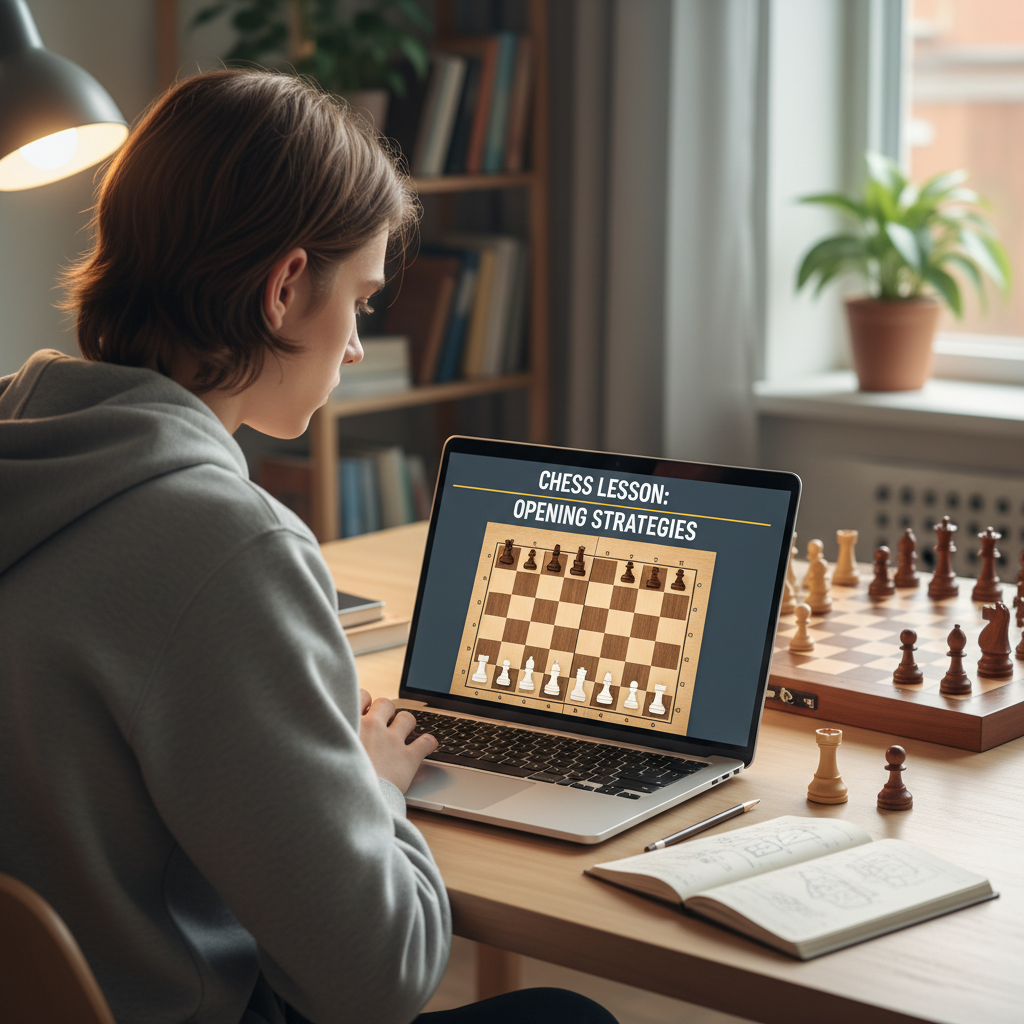
It is common for parents to monitor a rating on Chess.com or Lichess as the primary gauge of success. While these numbers provide a useful snapshot, they are often lagging indicators that fail to capture the nuances of a child’s development. Your child might be absorbing complex tactical concepts during their chess practice for weeks before those skills translate into a higher Elo score. A rating can fluctuate due to a short run of bad luck or a temporary lack of sleep, but true skill development is more stable.
Effective practice is not defined by a string of short term wins. Instead, it is the process of building long term cognitive habits, such as disciplined calculation and pattern recognition. At Kingston Junior Chess, we observe this distinction regularly. A student may lose a difficult game yet demonstrate a sophisticated understanding of a complex endgame or a tactical motif. We view this as significant progress. Our expert coaching environment is designed to measure both technical skill and character, focusing on how a child approaches a problem rather than just the final result. If a child is playing daily but the rating remains stagnant, they are often in a consolidation phase, where new knowledge is being integrated before it manifests in tournament results.
The Qualitative Signs: Behavioral Shifts in How Your Child Plays
When monitoring a child’s chess practice, the most profound indicators of growth often appear as behavioral shifts rather than just tactical puzzles solved. One of the clearest signals is a transition in 'Thinking Time.' In the early stages, beginners often play impulsively, making a move within one or two seconds of their opponent’s turn ending. As their understanding deepens, you will notice a deliberate, quiet pause. A child who begins to spend 10 to 20 seconds evaluating the board before touching a piece is demonstrating that they have moved from reaction to calculation. This pause represents a significant cognitive milestone; it is the physical manifestation of impulse control and the ability to visualize future states of the board.
Beyond the clock, sportsmanship serves as a vital barometer for psychological development. When a child can handle a loss without immediate frustration or tears, it suggests they are beginning to view the game as a logical puzzle rather than a personal defeat. A student who finishes a match and immediately asks their opponent, 'What did I miss?' is exhibiting the exact mindset we cultivate through expert coaching at Kingston Junior Chess. They are no longer focused solely on the outcome; they are becoming curious about the underlying logic of the match. This shift in perspective indicates that their mental framework is expanding to accommodate objective analysis, which is a skill that translates directly from the chessboard to their academic lives. These behavioral changes prove that the discipline of the game is taking root, regardless of what the current rating might suggest.
Technical Benchmarks: Moving from Random Moves to Strategic Plans
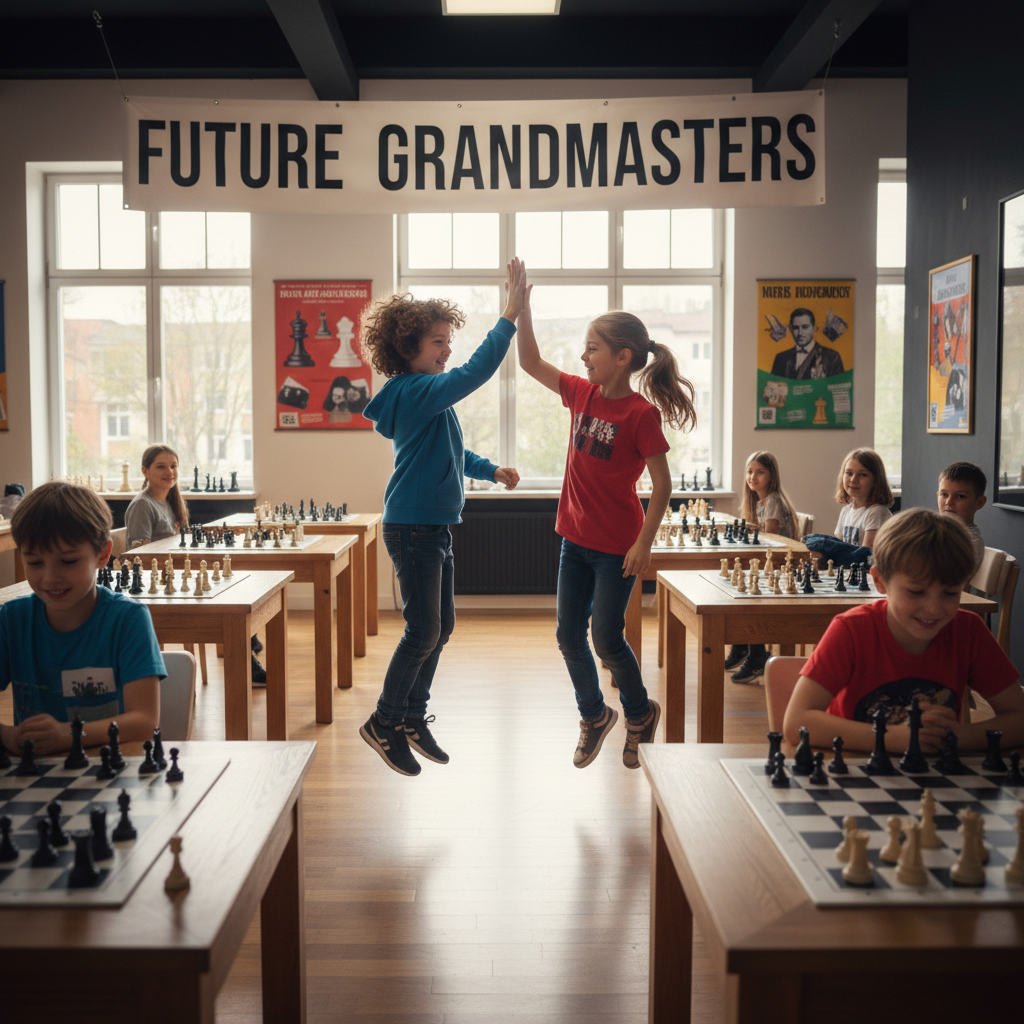
The transition from moving pieces randomly to playing with intent is the hallmark of technical improvement. One of the first signs of this shift is the emergence of chess literacy. You might hear your child describe a game using specific terms like a fork, pin, or skewer. This vocabulary change is significant because it suggests they are no longer seeing the board as thirty-two individual pieces, but as a series of interconnected tactical motifs. When a child identifies a fork during their chess practice, they are demonstrating that their brain has successfully categorized a specific geometric relationship between pieces, a skill that is essential for higher-level play.
Equally important is the move away from what coaches call hope chess. Beginners often make a move and simply hope their opponent does not see the threat. As a child’s skill matures, they begin calculating chess, which is the ability to anticipate responses. You can spot this when a child explains their reasoning using if-then logic: "If I move my knight here, they have to move their queen, and then I can take the bishop." This shift signifies that they are beginning to visualize the board several moves ahead, rather than just reacting to the immediate position.
A major milestone in this development is the successful application of chess practice puzzles to real-game scenarios. Solving a puzzle in an app is a valuable exercise, but recognizing that same pattern in the heat of an over-the-board match is a much higher cognitive achievement. At Kingston Junior Chess, our expert coaching focuses on identifying these tactical markers in real-time. We look for students who are actively searching for forcing moves like checks and captures, as this shows a move toward a structured, strategic plan. When these technical benchmarks appear, you can be confident that the time spent on study is successfully coalescing into a coherent playing style.
The Consistency vs Intensity Test for Home Chess Practice
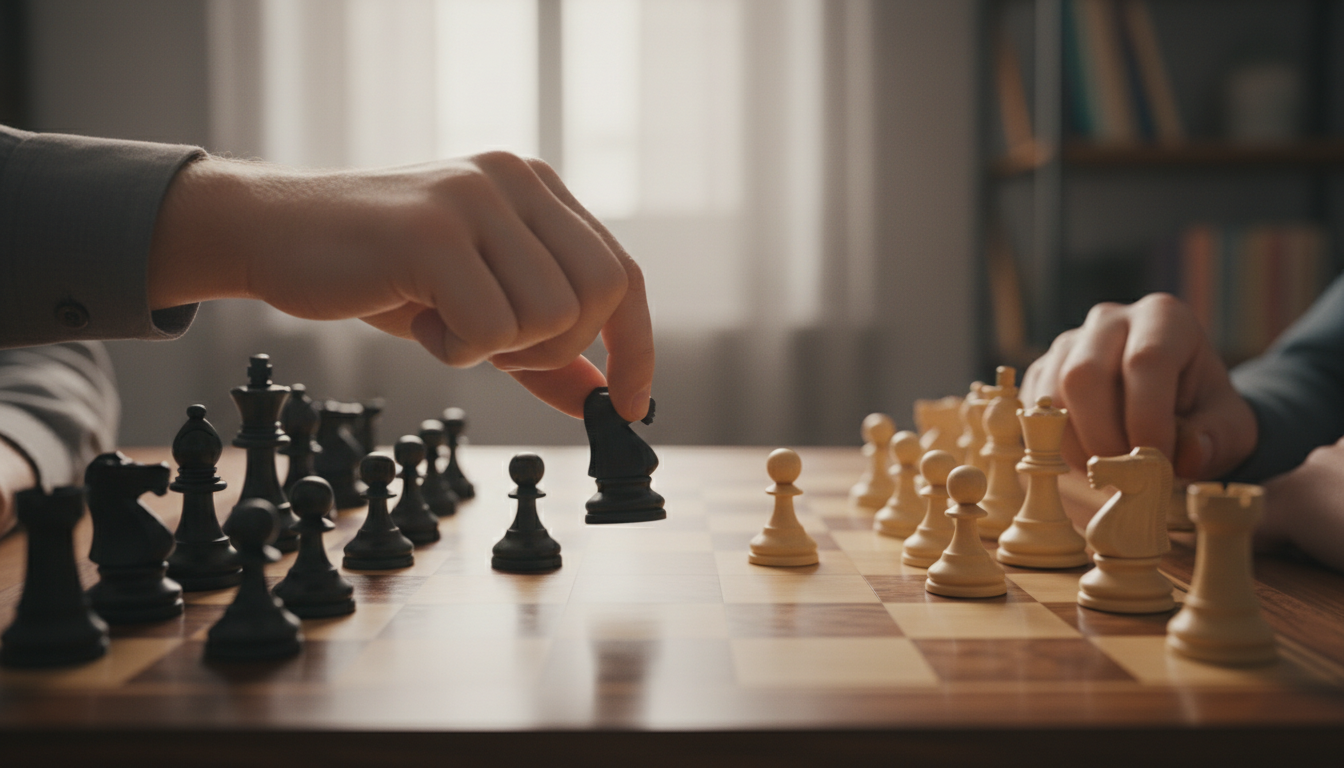
The transition from identifying tactical motifs to refining them requires a structured approach at home. Many parents ask how many hours a week are necessary to see results. In our experience, consistency far outweighs intensity. A 4-hour marathon session on a rainy Sunday is significantly less effective than 15 to 30 minutes of daily chess practice. Because chess is a game of pattern recognition, the brain needs frequent, short exposures to solidify these concepts into long term memory. Cramming leads to mental fatigue, whereas daily engagement keeps the neural pathways for calculation sharp.
To determine if the time spent at home is high quality, parents should audit the environment and the habits being formed. Simply playing games on a tablet is often the least effective form of study because it encourages fast, shallow thinking. We recommend shifting some of that time to a physical board.
Feature | Passive Practice (Low Growth) | Active Practice (High Growth) |
|---|---|---|
Medium | Screen only (fast-paced) | Physical board for puzzles or analysis |
Game Habit | Hits "New Game" immediately after a loss | Reviews the game to find the "blunder" |
Puzzles | Guesses moves until one works | Calculates the full sequence before moving |
Clock | Plays 1-minute "Bullet" games | Plays longer "Rapid" formats (15+ mins) |
High quality chess practice involves an element of struggle. If your child is breezing through puzzles without pause, the material is likely too easy. True growth happens when they must sit, focus, and work through a difficult position. At Kingston Junior Chess, our expert coaching emphasizes this deliberate approach, teaching students that the goal of home study is not to win games, but to understand why specific moves were made. This focused habit is what ultimately prepares them for the rigours of over the board competition.
Using Local Tournaments as a Benchmark in Kingston upon Thames

While home chess practice provides the foundation, the ultimate litmus test for any young player is over the board (OTB) competition. Online ratings are frequently inflated or volatile due to server-specific pools and the lack of physical distractions. In contrast, junior chess tournaments in Kingston upon Thames require a level of sustained concentration that an app cannot replicate. When a child sits across from a physical opponent, they must manage their nerves, navigate a three-dimensional board, and adhere to strict touch-move rules.
At Kingston Junior Chess, our sessions provide a structured environment where expert coaching goes beyond the result of a game. We observe how a child maintains their focus over a thirty minute round, their physical posture at the board, and their ability to stay calm under pressure. These behavioral observations are impossible to gather from a digital log or an automated game analysis. Competing against local peers also helps children contextualize their progress within a tangible community. Rather than being a faceless username, they become part of a local cohort of young thinkers. This sense of belonging fosters accountability and provides a clear benchmark for growth that exists outside of a screen. Seeing the same faces each week at our club in Kingston allows a child to measure their improvement against real-world benchmarks, turning abstract skill into a shared social experience.
Red Flags: When Chess Practice Might Be Stallling
Recognizing when chess practice has devolved into mindless repetition is essential for maintaining long term momentum. The most common warning sign is an over-reliance on bullet chess. Playing games with only one or two minutes on the clock might feel exciting, but it rewards impulsive moves over disciplined calculation. If a child is clicking through dozens of games in a single hour without any post-match reflection, they are likely reinforcing shallow habits rather than building strategic depth.
Another indicator of stalling is the avoidance of difficult material. Growth happens in the struggle zone. If a child skips puzzles because they are too hard or only solves those they can see in three seconds, their progress will plateau. Similarly, a sudden lack of enthusiasm or increased irritability during sessions suggests burnout. This often occurs when the intensity of training or junior chess tournaments is not balanced with the supportive, social environment we provide in Kingston.
Parents frequently ask if a 700 rating is bad. In developmental chess, no rating is bad; it is simply a data point. A 700 rating typically suggests a player understands the rules but still struggles with basic piece safety. Plateaus at this level are a natural part of the learning curve and should be viewed as a signal to adjust the routine rather than a reason to quit. Often, introducing expert coaching can help break these cycles by identifying the specific tactical blind spots that automated apps overlook.
The Parent's 10 Point Progress Checklist
To help you navigate plateaus, we recommend using a concrete set of benchmarks to track improvement during chess practice. This checklist focuses on the cognitive and behavioral milestones we prioritize at Kingston Junior Chess, offering a more accurate picture of growth than a digital rating alone.
Clock Management: Consistently utilizes more than 50% of their allotted time rather than rushing.
Verbal Analysis: Can clearly explain their best move and the logic behind it after a game concludes.
Tactical Independence: Identifies patterns such as forks, pins, or skewers without help from an adult or engine.
Sustained Concentration: Maintains focus and remains physically present at the board for the duration of a match.
Analytical Curiosity: Asks questions about why a loss occurred instead of immediately starting a new game.
Concept Application: Successfully uses a specific strategy from expert coaching in a live scenario.
Active Calculation: Pauses to visualize the opponent's potential response before touching a piece.
Emotional Maturity: Handles the loss of a queen or a difficult checkmate with composure and logic.
Consistency: Engages in 15 minutes of daily chess practice rather than infrequent marathon sessions.
Tournament Resilience: Approaches junior chess tournaments in Kingston as a chance to test new ideas rather than just a quest for trophies.
Understanding these key indicators will help you support your child's growth more effectively. While a personal checklist is a great starting point, translating those observations into a consistent training plan can be challenging. If you want expert help to refine their skills and build lasting confidence, we are here to support that transition. You can read more About our coaching approach and mission to see how we can help your young player reach the next level.