The best chess openings for kids prioritize fundamental principles like controlling the center, developing pieces quickly, and ensuring king safety over rote memorization. Beginners should focus on mastering straightforward systems such as the Italian Game while learning one reliable setup for White and two defensive responses for Black.
Watching your child stare blankly at a chessboard after their opponent deviates from a memorized sequence is a common frustration for many Kingston parents. While it is tempting to have young players memorize twenty moves of theory, this approach often fails the moment the game leaves the book. At Kingston Junior Chess, we believe that true mastery comes from understanding the logic behind the moves rather than just the sequence itself. Developing a strong opening foundation is about internalizing core principles that guide a player through any situation, ensuring they remain confident even when facing unfamiliar tactics. This guide explores the transition from rote memory to strategic thinking, covering the essential Golden Rules, the importance of the Italian Game, and the practical 20-40-40 rule. You will also learn how to help your child navigate common pitfalls like the Scholar's Mate while building a sustainable practice routine at home.
The Trap of Memorizing Chess Openings for Kids

When children first join our club in Kingston, parents often ask for a list of winning moves or specific sequences to memorize. This is a common pitfall when exploring chess openings for kids. Rote learning, while tempting, creates a fragile foundation. If a young player memorizes ten moves of the Italian Game but their opponent makes an unexpected deviation on the third turn, the child is often left feeling lost. Without understanding the logic behind the moves, they cannot adapt to the reality of the board.
Think of it like learning to read versus memorizing a specific book. A child who has memorized a specific story word for word might appear to be a fluent reader, but as soon as they are presented with a different text, they are unable to progress. We want our juniors to learn how to read the board. By focusing on expert chess coaching that prioritizes logic over memory, we ensure they can navigate any situation, even when the game goes off-script.
In our sessions, we emphasize that the opening phase is about following a set of internal logic rules. Deep theory and long variations are for professional players; for a junior just starting their journey, understanding the intent behind a move is infinitely more valuable than a list of memorized steps. This structured chess practice allows kids to build confidence through comprehension rather than repetition.
The Three Golden Rules of Opening Principles
Rather than focusing on specific sequences, we introduce our juniors to a framework of three golden rules. These function like the building blocks of a house; without a solid foundation, the entire structure will eventually collapse under pressure. These principles are universal and remain the core of any sound chess strategy for kids, regardless of the specific name of the opening being played.
Control the Center: The center squares (e4, d4, e5, and d5) are the most valuable real estate on the board. Controlling these squares is similar to a football team controlling the midfield; it dictates the flow of the game and allows pieces to move across the board efficiently. In our club sessions, we instruct our players to occupy or influence these squares from the very first move to ensure they have the space needed to maneuver.
Develop Minor Pieces: Next, players must "develop" their minor pieces, specifically their Knights and Bishops. In many chess openings for kids, there is a temptation to move the same piece multiple times or hunt for early pawns. However, a player who brings all their pieces into the game quickly will almost always overwhelm an opponent who leaves their army on the back rank. Think of this as getting all your teammates onto the pitch rather than playing with just one star player.
King Safety: The final building block is King safety, usually achieved through castling. A King left in the center is an easy target for tactical strikes. Castling tucks the King behind a protective wall of pawns and connects the Rooks. We often remind our chess parent community that a safe King is the prerequisite for any successful attack.
By treating these rules like a traffic light system; green for development, amber for central control, and red for king safety checks, our juniors learn to navigate the board with professional poise. This foundational approach ensures that even if an opponent plays a move they have never seen before, they have the tools to find the correct response.
Why We Start with the Italian Game in Kingston
Building on these golden rules, our coaches at Kingston Junior Chess introduce the Italian Game as the premier choice among chess openings for kids. Defined by the moves 1. e4 e5, 2. Nf3 Nc6, and 3. Bc4, this opening is a masterpiece of efficiency. It immediately occupies the center, develops a Knight and Bishop, and prepares the King to castle in just three moves.
We prioritize the Italian Game because it creates open positions. In these games, the board is less cluttered, making tactical patterns like pins and forks easier for a young player to identify. This clarity is vital for development. By contrast, complex responses like the Sicilian Defense involve deep positional theory that can overwhelm a beginner, while the London System, though solid, often results in cramped positions that stifle a child's natural tactical intuition.
Our expert chess coaching emphasizes this classical approach to ensure Kingston players develop a sense for piece activity and direct attacking lines. Instead of navigating the dense, strategic maneuvers required in closed systems, our juniors learn exactly why a piece is well placed. This provides a clear, logical roadmap from the very first move, allowing them to focus on the joy of the game rather than the frustration of a crowded board.
What is the 20-40-40 Rule in Junior Chess?
The 20-40-40 rule is a standard guideline used by coaches to ensure a balanced approach to improvement. It suggests that a player should divide their total study time into 20 percent on openings, 40 percent on tactics and the middlegame, and 40 percent on endgames. For families at Kingston Junior Chess, this provides a clear roadmap for home study and prevents the common mistake of over-preparing for the first few moves while neglecting the rest of the game.
When exploring chess openings for kids, it is easy to spend hours on specific lines. However, our expert chess coaching staff recommends that the 20 percent allocated to openings should focus almost entirely on the principles we have discussed. Rather than memorizing deep theory, a junior player should spend that time ensuring they understand why they are moving a specific pawn or piece. This structured chess practice allows them to spend the majority of their time on tactics, which is where most games at the junior level are actually decided.
How Many Chess Openings Should a Child Learn?
This 20 percent time allocation naturally leads to the question of quantity: how many chess openings for kids should a young player actually try to learn? At Kingston Junior Chess, we advocate for a "less is more" approach. Rather than skimming the surface of a dozen different systems, a child benefits most from a narrow, reliable repertoire. We recommend mastering just three core components: one solid opening for White, such as the Italian Game or Ruy Lopez, and two responses for Black, one to counter the King’s Pawn (1. e4) and another for the Queen’s Pawn (1. d4).
Focusing on a single system for White allows a child to become an expert in the specific tactical patterns and pawn structures that arise from those moves. This depth of understanding provides a psychological edge; while an opponent might be playing a move they have only seen once or twice, our juniors are operating in familiar territory. Our expert chess coaching focuses on these specific pathways to build genuine confidence.
Research into junior development suggests that intensive opening study only becomes a primary driver of success once a player reaches a club rating of approximately 900 to 1000. Until that milestone, games are almost always decided by middle-game blunders or tactical oversights. By limiting the number of openings, kids can dedicate more of their structured chess practice to the tactics and endgames that actually secure the win.
Common Opening Mistakes and the Scholars Mate
While focusing on a narrow repertoire helps, young players must also learn to navigate common chess opening traps for kids. The most notorious is the Scholar’s Mate, a four move sequence where the White Queen and Bishop target the vulnerable f7 square. At our sessions in Kingston, we teach juniors that this trap succeeds only when the defender ignores the golden rule of development. Bringing the Queen out early is usually a mistake because it allows the opponent to develop their pieces while simultaneously attacking the Queen, gaining valuable time.
Parents watching games at home should look for these four common errors:
Moving the Same Piece Twice: This wastes time, known as "tempi." Each piece should move to its best square once before others join the fray.
Pawn Hunting: Grabbing a stray pawn at the expense of development often leads to a quick defeat. A lead in development is usually worth more than a single pawn.
Neglecting the King: Leaving the King in the center while the files open up is a recipe for disaster.
Premature Queen Attacks: Using the Queen as a solo attacker before the minor pieces are ready.
By reinforcing these principles during structured chess practice, children learn to spot these tactical blunders naturally. Our expert chess coaching emphasizes that a solid opening is not just about what you do, but also about identifying when an opponent has violated these core rules. This awareness helps our chess parent community support their children as they move from basic survival to strategic dominance.
Supporting Your Child's Chess Practice at Home in Kingston
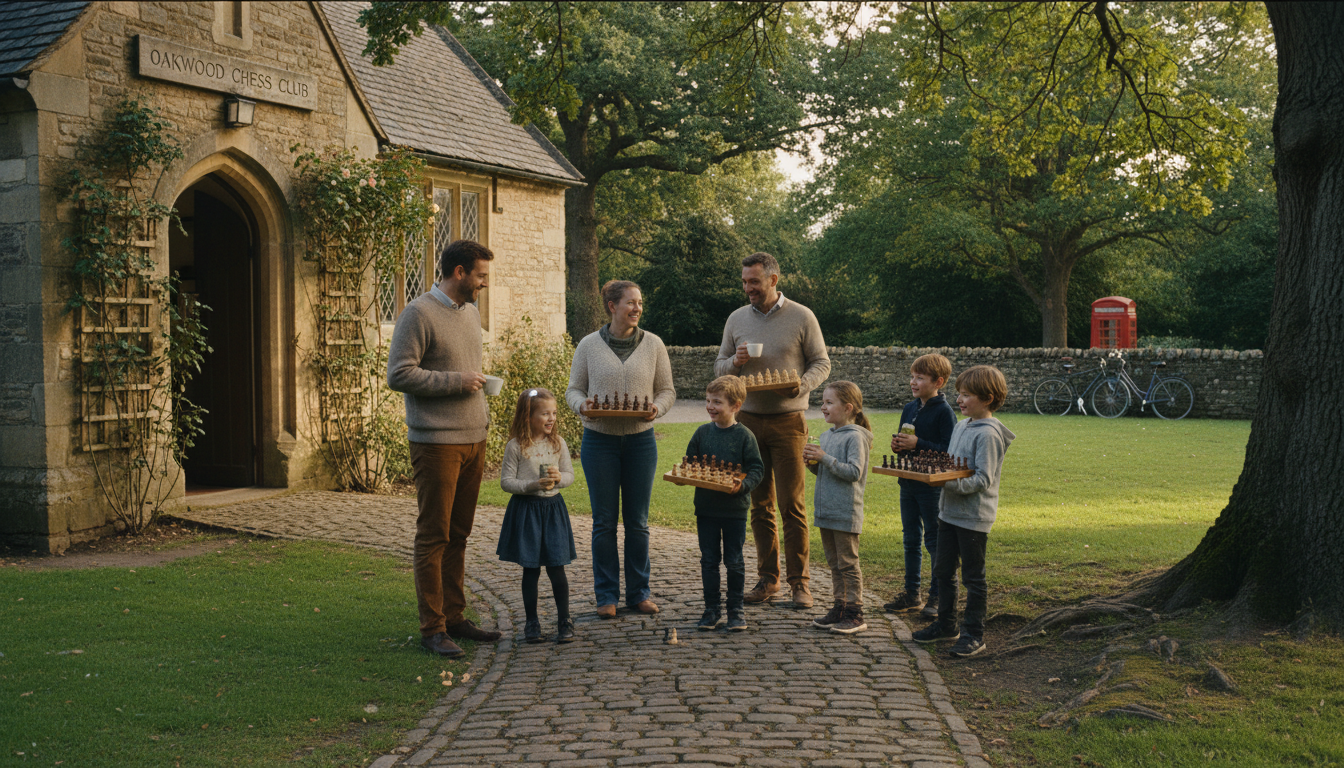
Parents in Kingston can support their child's development without knowing the deep theory of chess openings for kids. The most effective way to reinforce our club lessons is through tactile, physical play. Setting up a real board on the kitchen table is often superior to staring at a tablet screen; it encourages a slower, more thoughtful pace and better spatial awareness. If you are looking for a change of scenery, local spots like the Kingston Library provide a quiet, studious atmosphere perfect for reviewing a new idea or playing a friendly game away from home distractions.
As a parent, your role is not to teach new moves but to act as a supportive sounding board. During home games, simply ask your child if they have met the three golden rules before they launch an attack. Are their pieces developed? Is the King safe? This simple check reinforces the expert chess coaching they receive at our weekly sessions. While a well illustrated chess opening book for kids can be a helpful reference for visual learners, prioritizing active play ensures these concepts become second nature.
Our weekly club serves as the practical laboratory where these home experiments come to life. By participating in structured chess practice, children get to test their opening choices against peers in a controlled, supportive environment. Engaging with our chess parent community also allows families to share resources and organize local meetups, turning solitary study into a vibrant, social hobby right here in Kingston upon Thames.
Ultimately, success in the opening comes down to understanding the logic behind the moves rather than just memorizing a sequence. By focusing on fundamental principles, children build a stronger chess foundation that serves them better in the long run. If you want expert help to guide your child through these strategic concepts, our Coaching provides the personalized feedback necessary to refine their skills. This approach ensures they not only play better but also truly enjoy the game as they grow.