Mastering the chess middlegame for kids involves teaching them to identify tactical opportunities like forks and pins while consistently improving the position of their pieces. To help your child make a plan, focus on evaluating the board to find targets for attack and ensuring all their pieces are defended; this strategic approach bridges the gap between the opening moves and the final checkmate.
Many young players memorize their opening sequences with precision, yet they often stall once the last book move is played. This transition period, known as the middlegame, is where the initial excitement of the development phase can turn into aimless pawn pushing or tactical blunders. For a child to progress from a casual enthusiast to a competitive club player, they must learn to navigate this complexity with a clear plan. In this guide, we will explore how to identify when the opening ends and the middle begins. We will break down the three pillars of middlegame strategy, explain the essential difference between tactics and strategic planning, and introduce practical methods like the Worst Piece technique. By the end, you will have a toolkit of specific questions to ask your child during home practice, helping them play with purpose in every game.
The Post Opening Slump: Why Kids Get Stuck in the Middlegame
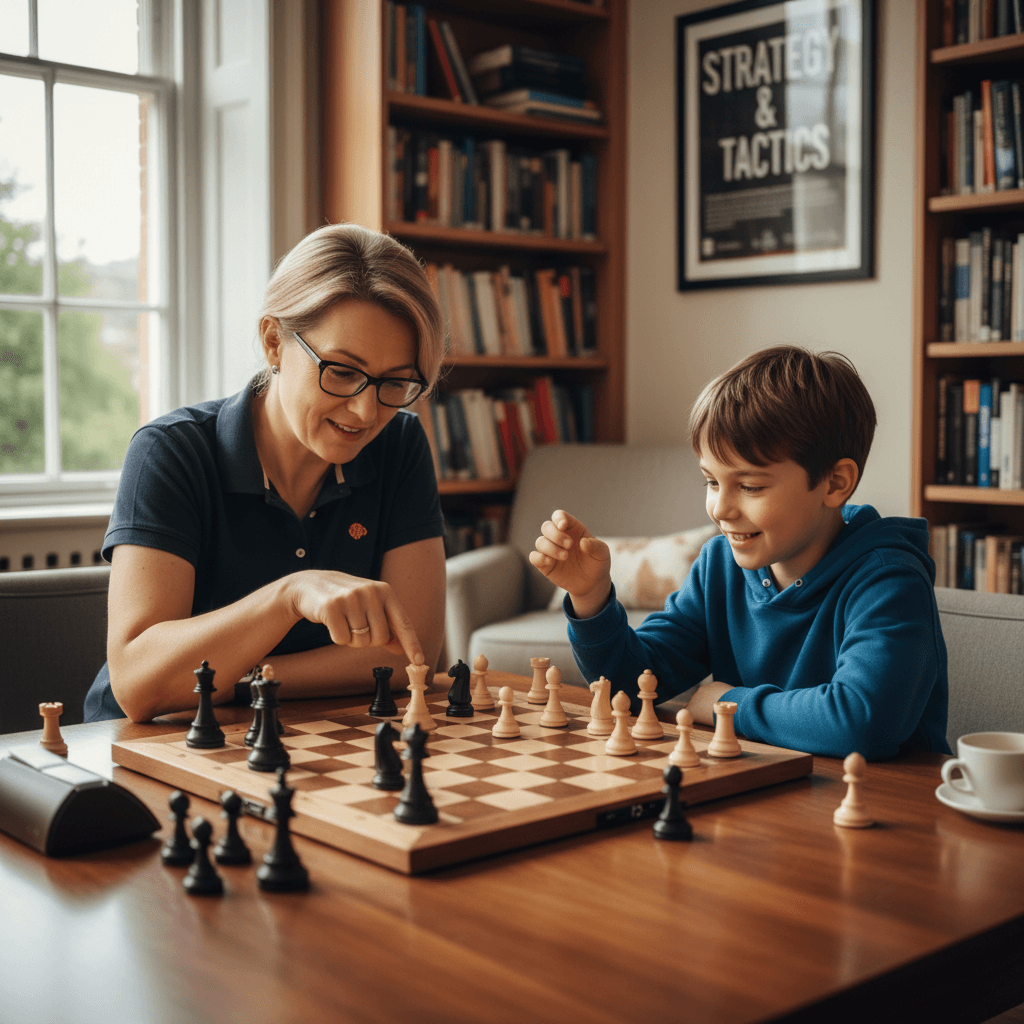
Many parents in Kingston notice a familiar pattern during home matches or local school clubs. Their child flies through the first ten moves, confidently placing knights and bishops on active squares. Then, the tempo drops. They hit a visible wall. This transition marks the start of the middlegame, the phase where the real battle happens before the final simplification of the endgame. While the opening is about setting up the board, the middlegame is where the actual fighting takes place.
In our expert coaching sessions, we often see young players start making random moves at this stage. They might shuffle a king back and forth or push a side pawn without a clear purpose because they lack a concrete plan. This post opening slump occurs because the game has shifted from memorized patterns to original, strategic thinking. Understanding the chess middlegame for kids requires moving beyond just developing pieces to actually using them in a coordinated way.
Bridging this gap is one of the most significant hurdles for a developing player. As a parent, you can help by recognizing that this stall isn't a lack of talent, but a lack of specialized tools. By learning how to identify goals, your child can turn a static position into an active attack.
When Does the Opening End and the Middlegame Begin?
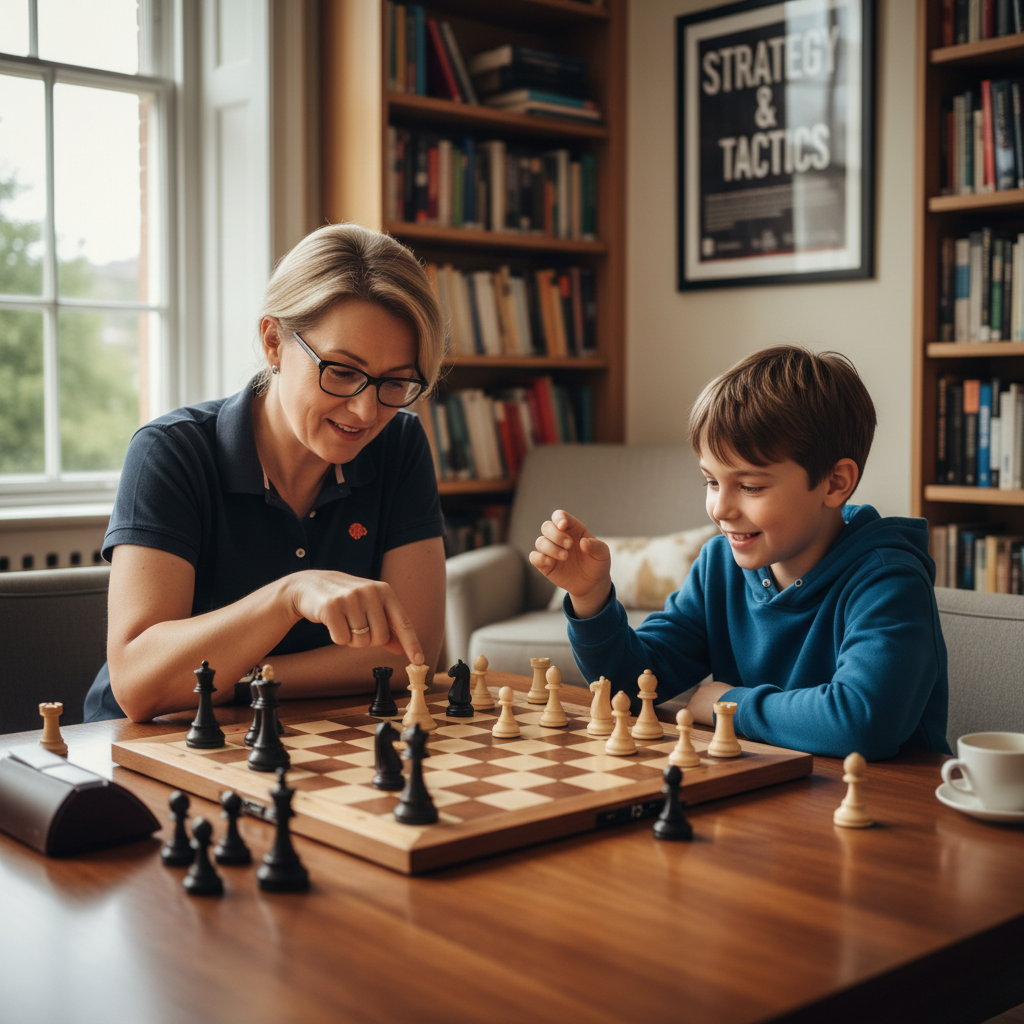
To move past the post-opening slump, a child needs to recognize exactly when the rules of the opening stop and the creativity of the middlegame begins. Think of it like a football match. The opening is the pre-match warm-up and the moment the team stands in their starting formation. Every player is in their correct zone, but the whistle hasn't blown for the main action yet. The middlegame is the moment the ball is in play and the tactical struggle for the goal starts.
In our chess practice sessions, we teach students to use a Development Checklist to identify this transition. The opening phase officially ends once four specific criteria are met:
Minor pieces are out: Both Knights and both Bishops have moved off their starting squares to active positions.
The King is castled: The King is tucked safely behind a wall of pawns, usually on the kingside.
The Queen has moved: She has stepped off the back row, even if only by one square.
The Rooks are connected: With the minor pieces and Queen out of the way, the two Rooks can now see each other along the back rank without any pieces between them.
Once these boxes are ticked, the board is fully mobilized. There are no more automatic development moves left to make. At this point, the chess middlegame for kids becomes about purpose rather than preparation. If your child has completed this checklist, they have finished the setup. The next move they make is the first real step in their strategic plan.
The Three Pillars of Chess Middlegame Strategy for Beginners
Once the development checklist is complete, the next challenge is deciding what to do with those active pieces. To help our students navigate the chess middlegame for kids, we simplify strategic thinking into three pillars. By evaluating these three areas, a young player can stop guessing and start forming a logical plan based on the reality of the board.
### 1. King Safety This is the most critical pillar. Before looking for ways to win, a player must ensure they are not about to lose. We encourage children to ask: "Is my King tucked away behind a wall of pawns, or is the roof missing?" If their King is exposed, the plan must be defensive. Conversely, if the opponent has failed to castle or has pushed the pawns in front of their King, the child’s plan should shift toward an immediate attack. During our expert coaching sessions, we teach that a safe King is the foundation for any successful offensive.
### 2. Piece Activity In a match, pieces are either "sleeping" or "working." A bishop stuck behind its own pawns or a knight sitting on the very edge of the board is sleeping; it contributes nothing to the battle. A working piece is usually centralized, controlling important squares and restricting the opponent. If the Kings are safe and the material is even, the best plan is almost always to find the sleepiest piece and wake it up. Improving the position of a single piece can often cause the opponent's entire defense to crumble.
### 3. Material Balance This pillar involves a simple headcount of the remaining "army." If a child has captured more of the opponent's pieces than they have lost, their plan should be to simplify the game. Trading pieces when you are ahead usually leads to a much easier win. If they are behind, however, the plan changes to keeping the game complicated, avoiding trades, and looking for tactical tricks. Mastering these shifts in strategy is a core part of succeeding in junior chess tournaments, where managing a material advantage often decides the winner.
Helping Your Child Find a Plan: The Worst Piece Method
Even when the three pillars of strategy are understood, children often stare at the board without knowing where to move next. The 'Worst Piece Method' is a practical tool we use in our expert coaching to provide immediate clarity. It turns a complex strategic landscape into a single, actionable question: which piece is doing the least?
A 'worst piece' is any member of the army that is not currently contributing to the battle. Common examples include a 'tall pawn,' which is a bishop trapped behind its own fixed pawns, or a knight sitting on the edge of the board where its range is severely limited. In our chess practice sessions, we encourage students to physically look for the piece that looks the 'unhappiest' on the board.
Once the piece is identified, the goal for the next few moves is clear. The child should find a way to relocate that piece to a more active square. This approach simplifies the chess middlegame for kids by breaking down abstract positional concepts into a manageable task. By focusing on improving their weakest link, young players naturally create a more harmonious position where tactical opportunities are more likely to arise.
Tactics vs Strategy: Teaching the Difference Simply
Transitioning from piece improvement to winning material requires understanding the relationship between tactics and strategy. We often describe strategy as the whole race, while tactics are the individual sprints. Strategy involves the long-term process of maneuvering pieces into better positions and identifying weaknesses in the opponent’s setup. In the chess middlegame for kids, this is the big picture thinking that guides where the army should go.
Tactics are the sharp, short-term sequences that win material or checkmate the king. Common examples include forks, where one piece attacks two at once, or pins, where a piece is stuck defending a more valuable one behind it. During our expert coaching sessions, we explain that while tactics often win games at the beginner level, they do not happen by accident.
A child who focuses only on looking for a skewer might miss the fact that their pieces are too far away to execute it. Strategy creates the environment where tactics become possible. By following a sound plan, such as controlling the center or improving a worst piece, a player naturally places their forces in positions where tactical opportunities arise. Mastering this distinction helps students during junior chess tournaments to stop hoping for a lucky mistake and start engineering their own path to victory.
The 40, 40, 20 Rule in Chess Explained for Parents
The 40, 40, 20 rule is a standard training benchmark that allocates a player's study time: 40 percent to openings, 40 percent to the middlegame, and 20 percent to the endgame. For young players, however, this rule also reflects the intensity of a live match. While the opening is often guided by memory, the middlegame requires intense, original calculation. This is why the chess middlegame for kids often consumes the largest share of their mental energy during a game.
In the context of local junior chess tournaments, games are rarely lost because a child forgets their first three moves. They are usually lost in the middle phase when the complexity peaks. By prioritizing simple, repeatable principles, such as piece activity and king safety, children can manage this high-pressure phase more efficiently. Mastery here allows them to arrive at the endgame with enough mental stamina and material advantage to secure a win. Understanding this distribution helps parents realize that middlegame struggles are a natural part of the learning curve rather than a lack of effort.
Three Questions Parents Can Ask During Practice at Home
Parents often feel they cannot help with home practice because they lack the technical knowledge to spot a winning sequence. However, you do not need to be a Grandmaster to help your child navigate the chess middlegame for kids. Instead of focusing on finding the 'correct' move, focus on guiding their thought process. During home training or informal games, try asking these three specific questions to help them form a plan.
First, ask: "Which of your pieces is the unhappiest right now?" This directly applies the Worst Piece Method, prompting the child to evaluate piece activity and identify a knight on the rim or a bishop blocked by its own pawns. Second, ask: "What is your opponent trying to do?" This encourages prophylaxis, the habit of anticipating threats before they happen. Finally, ask: "If you could move twice, what would you achieve?" This allows the child to visualize a long-term goal rather than just reacting to the immediate position.
By using these prompts during chess practice sessions at home, you encourage critical thinking and mental discipline. This supportive approach helps children refine their decision-making before they face the pressure of junior chess tournaments, where they must rely on these internal dialogues to succeed. These questions foster independence, shifting the focus from the result of a single game to the development of a strategic mind.
Practical Middlegame Practice in Kingston upon Thames
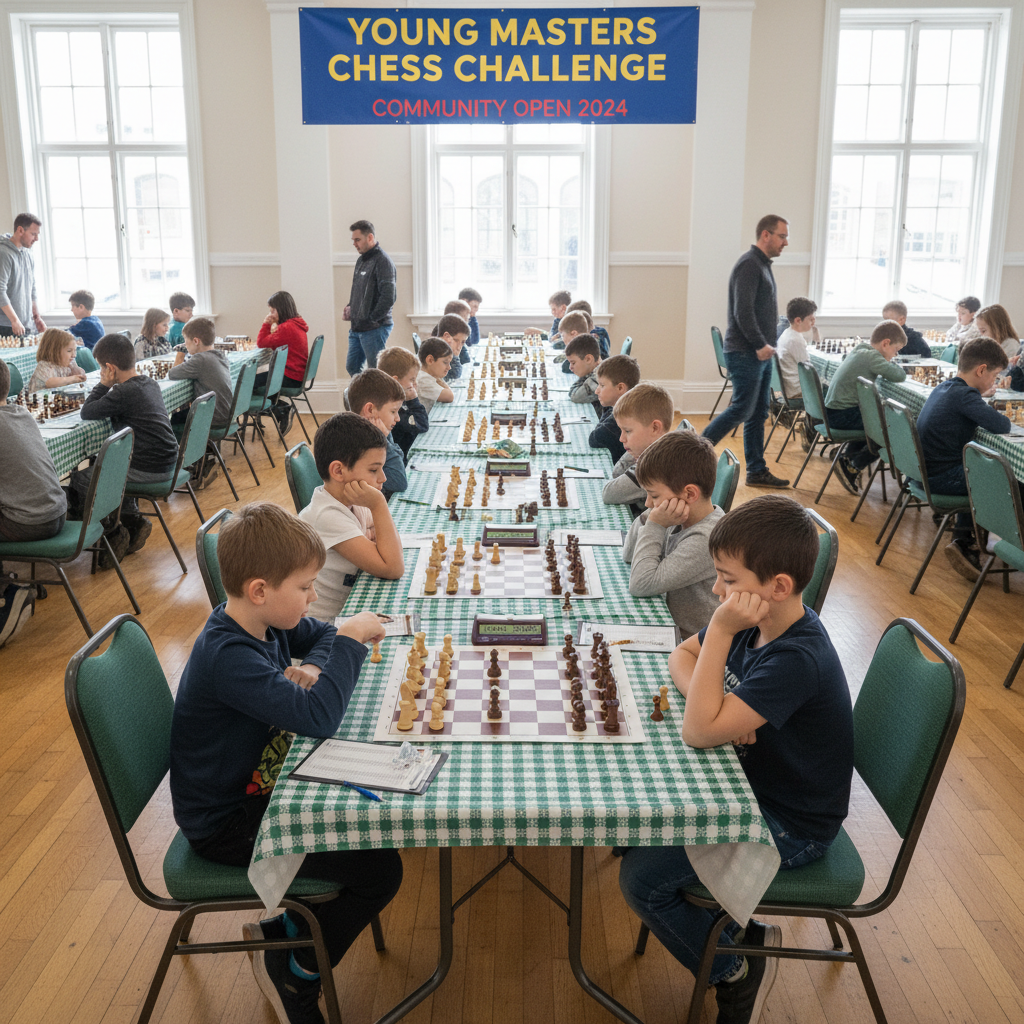
While home study and asking the right questions provide a vital foundation, the chess middlegame for kids truly comes to life when tested across a physical board. Reading about piece activity is one thing; maintaining a strategic plan while a clock is ticking and an opponent is challenging your every move is quite another. This is why joining a local community like Kingston Junior Chess is so beneficial for development.
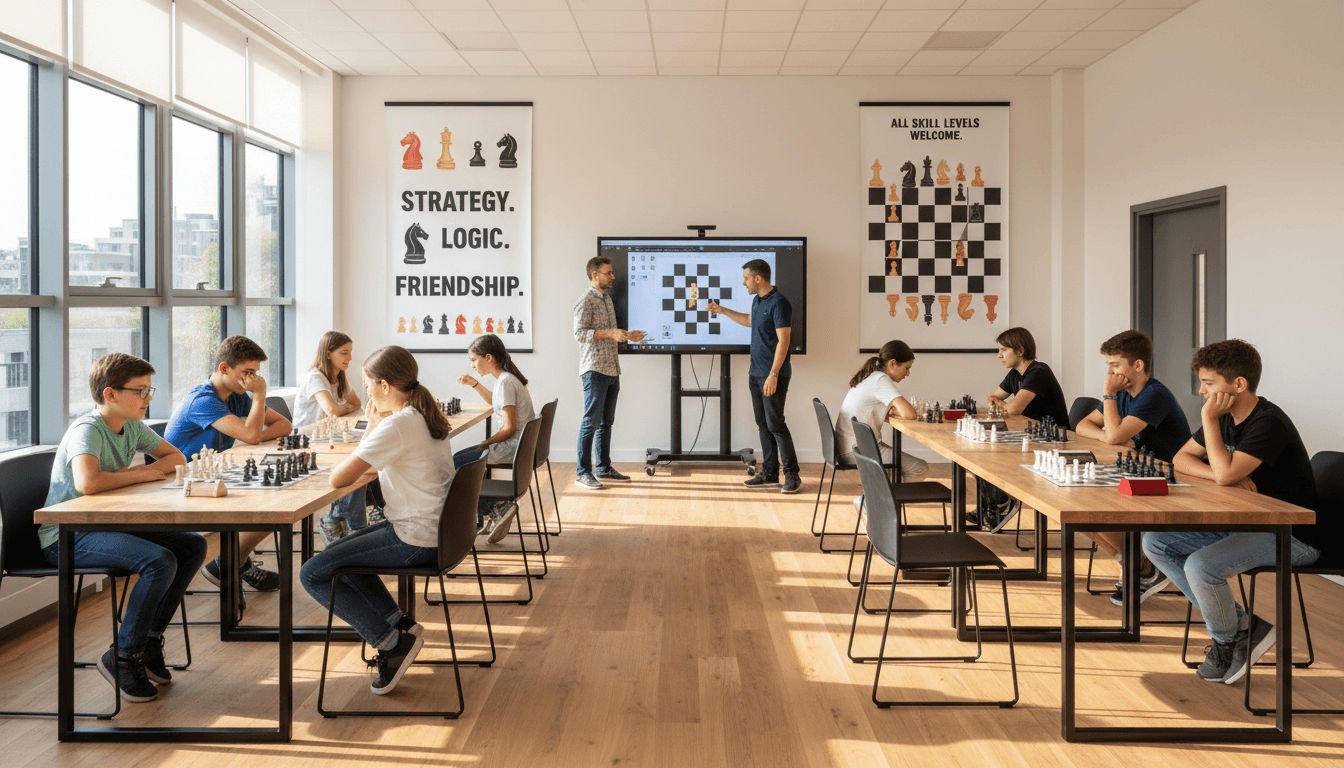
In our bright community hall, young players move beyond theory into active application. During our chess practice sessions, children get the chance to test their "Worst Piece" strategies against peers of similar skill levels. This environment provides immediate, tangible feedback that no book can replicate. When a plan succeeds or fails, our coaches are on hand to provide expert coaching, helping students analyze exactly where their coordination broke down or where a tactical opportunity was missed.
Beyond the technical gains, the social aspect of learning in Kingston is transformative. Chess can be a solitary pursuit, but in a club setting, it becomes a shared challenge. Watching a peer navigate a complex middlegame encourages kids to stay focused and resilient. By participating in regular friendly matches and local junior chess tournaments, children learn to handle the pressure of the middlegame with confidence, turning abstract concepts into second nature within a supportive, local environment.