Regarding a first chess club session for kids what to expect involves a combination of structured strategy lessons, social etiquette training, and supervised tournament play. Most clubs begin with a group learning segment before pairing students for matches where they practice shaking hands and respecting their opponents. These sessions provide a fun environment for children to master basic rules and tactics while developing sportsmanship alongside their peers.
Stepping into a junior chess club for the first time can feel like a daunting move for both parents and children. You might worry about whether your child is ready for the mental rigour of the game, or how they will handle the social dynamics of a competitive setting. At Kingston Junior Chess, we understand that a well prepared start is the foundation for fostering a lasting passion for strategic thinking. This initial session is about much more than just learning to move pieces; it is about building confidence and mastering the silent language of the board. In this guide, we will outline exactly what to bring to the hall, how our local sessions are structured, and the essential etiquette every new player learns. We will also provide practical advice for supporting a nervous child to ensure their first experience is rewarding.
The Excitement of Starting a Junior Chess Journey
The first step into a new hobby is often a mix of anticipation and nerves. For parents, understanding the first chess club session for kids what to expect is the best way to ensure that initial excitement translates into a lasting interest. While chess is fundamentally an intellectual pursuit, a child’s first day at a club feels remarkably similar to their first day at football training or drama class. There is the same buzz of energy, the same search for friendly faces, and the same quiet tension before the first move is made.
Kingston Junior Chess serves as a welcoming local hub in Kingston upon Thames, designed to bridge the gap between learning the rules and enjoying the game’s deep strategic layers. We provide expert coaching in a structured environment where camaraderie is just as important as the board state. If you are considering introducing your child to the game, you can book a trial session to see how our community operates firsthand.
This guide aims to remove the mystery surrounding the club environment. By understanding the flow of a session and our commitment to safety through our safeguarding policies, parents can handle the logistics, allowing their children to focus entirely on the fun of the game.
What to Bring to Your First Chess Club Session
One common concern for parents is the cost of specialized equipment. At Kingston Junior Chess, we remove this barrier by providing everything needed for play: high-quality boards, weighted pieces, and digital game clocks. You do not need to purchase any gear to attend your book a trial session.
For the child, focus on comfort and energy. If they are arriving directly from school, we recommend packing a water bottle and a small, mess-free snack. Foods like apple slices or cereal bars are ideal; we aim to keep our playing surfaces clean and free of crumbs.
While not a requirement for the club, having a simple chess set at home is highly beneficial. It allows children to review the tactics covered during our expert coaching sessions and practice with family. Getting the logistics right regarding equipment and snacks helps clarify the first chess club session for kids what to expect, allowing them to arrive prepared and ready to focus on the board.
Junior Chess Club Session Structure: A Peek Inside

A structured environment is the foundation of progress at Kingston Junior Chess. By following a predictable rhythm, we ensure that every child balances social enjoyment with tangible skill development. Our sessions are typically divided into four distinct phases that guide players from casual play into deep strategic thinking.
Arrival and Warm-up Games: This initial social period allows children to settle into the environment. Early arrivals often play friendly, unrated games with their peers. This is an essential time for building friendships and shaking off the school day before the focused work begins.
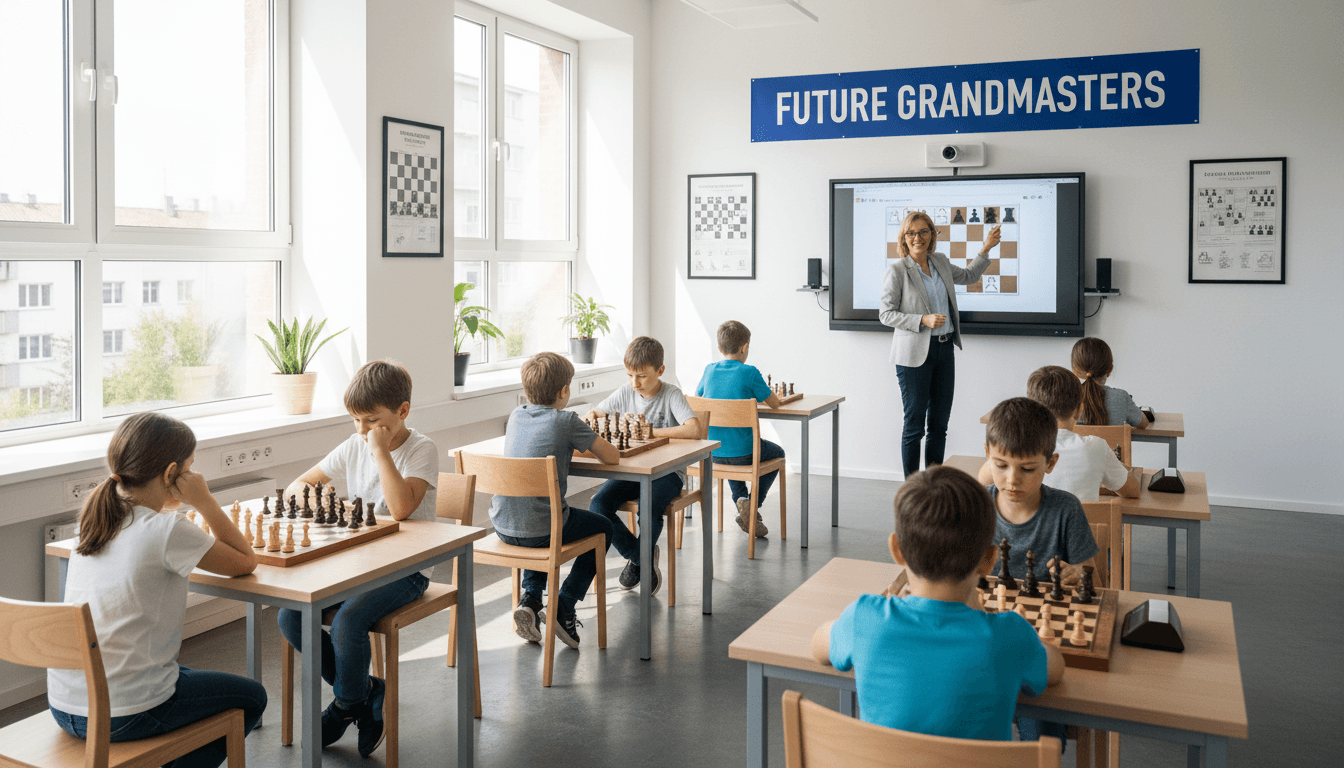
Expert Coaching: Once the group is assembled, our instructors lead a formal lesson. These sessions involve expert coaching on topics such as tactical motifs, opening principles, or historical games. We prioritize interactive learning, using demonstration boards to ask questions and challenge students to find the best move in a given position.
Supervised Practice: After the lesson, children are given time to apply what they have just learned. Coaches circulate the room to provide immediate feedback, ensuring that theoretical concepts are translated into practical board vision.
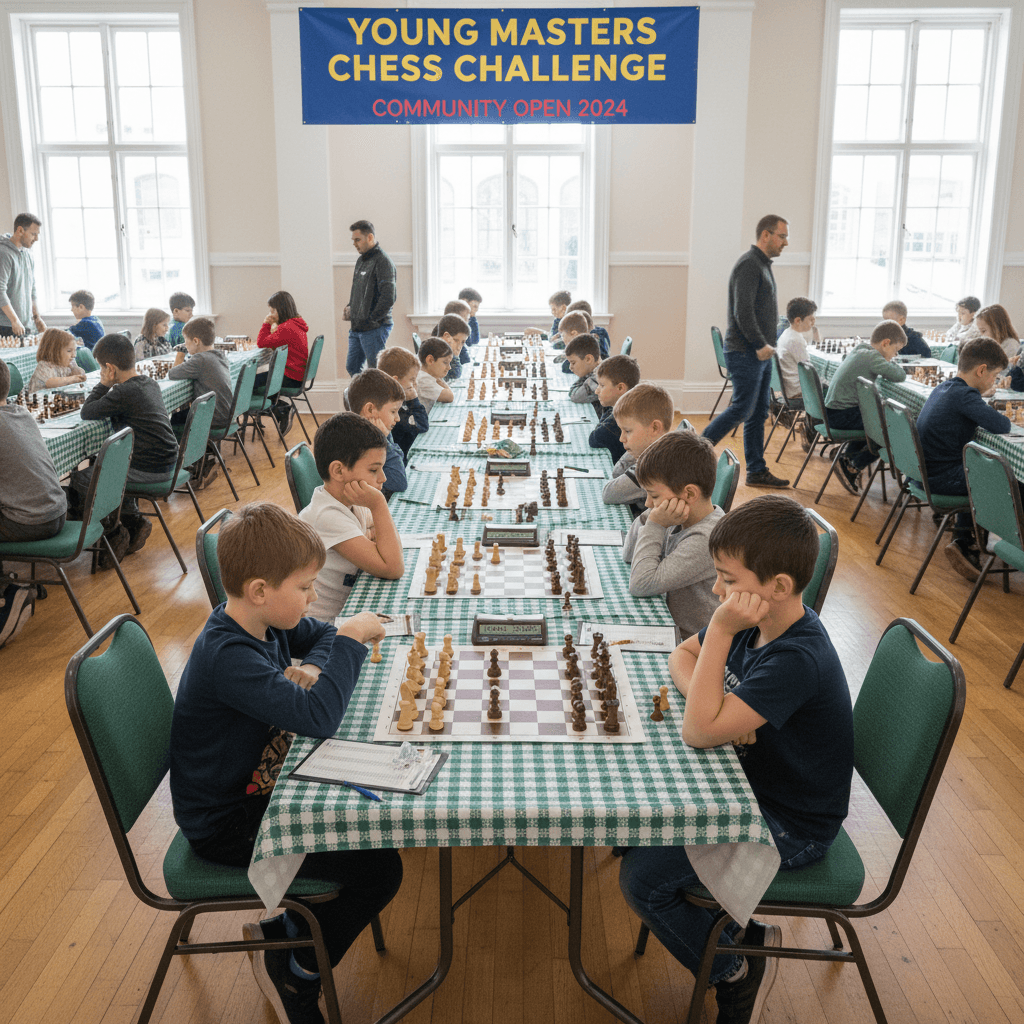
The Tournament Round: The session concludes with a round of our ongoing club tournament.
Many parents ask about the fairness of these games, especially for beginners. We utilize the Swiss System for pairings, which is a non-eliminating tournament format. In this system, children are matched against opponents with a similar number of points. This means that as the tournament progresses, your child will consistently play someone of a comparable skill level. This is a vital component of the first chess club session for kids what to expect; it guarantees that no child is discouraged by facing opponents who are far more experienced. Instead, every game remains a competitive, achievable challenge that builds confidence through fair play.
Chess Etiquette: The Social Rules Every New Player Learns

While the competitive spirit is high during the tournament round, the atmosphere at Kingston Junior Chess is governed by a set of traditional social rules. These rituals help transition children from the high energy of the playground to the focused environment of the chessboard. Understanding these expectations is a key part of the first chess club session for kids what to expect.
The most immediate tradition is the handshake. Every game begins and ends with this gesture of mutual respect. We teach our young players to look their opponent in the eye and offer a "Good luck" at the start and a "Good game" at the finish. This practice ensures that regardless of the result, the social bond between the players remains intact. It is a practical lesson in sportsmanship that helps children handle both victory and defeat with grace.
New members also learn the touch move rule. In formal chess, if a player intentionally touches one of their own pieces, they are required to move it; if they touch an opponent's piece, they must capture it if a legal move exists. This rule is fundamental to our expert coaching because it encourages children to complete their mental calculations before reaching for a piece. It shifts the game from impulsive reactions to considered strategy, teaching players to take responsibility for their choices.
Finally, parents will notice that the playing hall is significantly quieter than a typical sports venue. We foster an environment where concentration is protected. This silence is not about strict discipline; rather, it is about showing respect for the opponent’s thinking time. Learning to operate in a quiet, focused space helps children develop a longer attention span and better emotional regulation under pressure. If you want to see how your child adapts to this respectful environment, you can book a trial session to experience a club evening.
Supporting a Shy or Nervous Child at Their First Session

The quiet, structured nature of the game makes chess a sanctuary for children who may find loud, high-energy team sports overwhelming. While a football pitch demands vocal coordination and physical presence, the chessboard rewards internal processing and observation. For a shy or nervous child, the first chess club session for kids what to expect is an environment where they are not forced into the spotlight. Instead, they can integrate at their own pace, using their ability to sit still and concentrate as a natural advantage.
If your child is anxious about joining, reassure them that it is perfectly okay to be quiet. In our playing hall, focus is treated as a superpower rather than a social barrier. Our lead coach, Chris Briscoe, is highly experienced in welcoming new members gently. We understand that the first step is often the hardest; therefore, we prioritize making the initial book a trial session a low-pressure experience. Chris and the coaching team ensure that new players are introduced to peers with similar temperaments, facilitating connections through the shared language of the game rather than forced social performance.
Confidence at Kingston Junior Chess builds through gradual skill mastery. Rather than relying on charisma or physical dominance, a child’s self-esteem grows as they grasp a new opening or successfully navigate a complex endgame. This sense of achievement is deeply personal and objective. As they receive expert coaching and see their understanding of the game improve, their social confidence often follows naturally. This internal validation ensures every child feels valued for their mental efforts.
Practicalities for Kingston Parents: Timing and Location
Kingston Junior Chess operates in a secure, central location within Kingston upon Thames, making it straightforward for local families to integrate the club into their weekly routine. When planning for the first chess club session for kids what to expect includes a structured arrival and departure procedure designed for safety. We maintain strict adherence to our safeguarding policies, requiring parents to sign their children in at the start of the evening. This ensures that every child is accounted for before the expert coaching begins.
Common Questions About Starting Junior Chess
Many parents still have lingering queries about the first chess club session for kids what to expect beyond the logistics and location. Here are the most frequent questions we address for families in Kingston upon Thames.
What age is appropriate for a chess club? Our club is designed for children between the ages of 6 to 18. The primary requirement is not a specific age, but the ability to sit through a twenty minute game and follow basic instructions. We see great success with both younger children starting their journey and teenagers looking to refine their strategy through expert coaching.
Is chess good for kids with ADHD?
Chess is often recommended for children with ADHD because it provides a clear, logical structure with immediate feedback. Each move has a visible consequence, which helps maintain engagement. The quiet atmosphere and the tactile nature of moving the pieces can foster a level of concentration that many children find difficult to achieve in more chaotic environments.
Do I need to know how to play chess to help my child?
You do not need any prior knowledge of the game to support your child. While you are welcome to book a trial session to see our environment, our coaches handle all technical instruction. Your most valuable contribution is encouraging their practice and ensuring they feel supported as they learn from both their wins and their losses.
Navigating your child's first chess club meeting is mostly about fostering a positive experience and managing nerves. By focusing on the fun aspects and setting realistic expectations, you help them build a strong foundation for the game. Once they feel comfortable and start showing a deeper interest, you might find they need more structured guidance to reach the next level. If you feel they would benefit from expert support to sharpen their skills, our personalized Coaching programs offer a gentle way to accelerate their development through professional insight and tailored lessons.