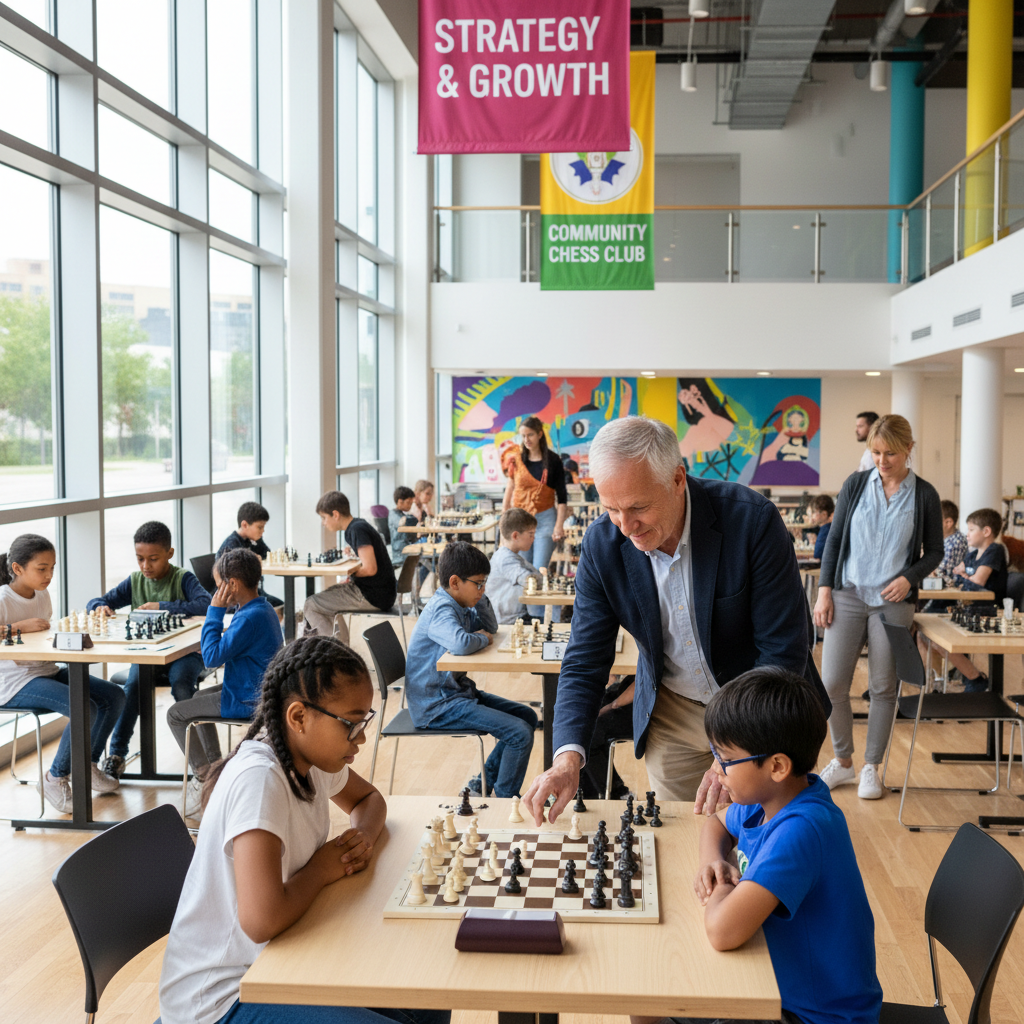
Parents can support child chess at home for parents who don't play by establishing a consistent daily routine focused on solving puzzles and playing slow, thoughtful games. You can foster improvement by prioritizing the learning process over tournament results, providing a physical board for tactile practice, and ensuring sessions remain short and enjoyable for the child.
Watching your child stare intently at a checkered board, lost in a silent battle you do not fully understand, can be a frustrating experience for any dedicated parent. You want to nurture their talent, yet the technical complexities of the game feel entirely inaccessible. At Kingston Junior Chess, we know that a parent's most vital contribution is not tactical expertise, but the creation of a disciplined, supportive environment. You do not need to be a Grandmaster to help your child reach their potential. This guide provides practical strategies to facilitate their growth, ranging from establishing a manageable daily puzzle routine to helping them analyze their games through critical questioning rather than technical feedback. You will learn how to leverage safe online resources and foster the resilience necessary for tournament play, ensuring your child thrives even if you never move a pawn yourself.
The Secret to Chess Success: You Don't Need to Be a Grandmaster
Many parents feel a pang of anxiety when their child joins a weekly junior chess club, fearing they cannot provide guidance because they do not know the rules. This concern is understandable but misplaced. You do not need to be a Grandmaster to effectively support child chess at home for parents who don't play; in fact, the most successful students often have parents who view themselves as facilitators or managers rather than coaches.
While our expert coaching handles the technical nuances and tactical theory, your role is to facilitate the environment. Strategic play develops through steady, incremental habits that happen outside our club sessions. Research indicates that a student who engages in just fifteen minutes of focused practice daily improves two to three times faster than one who only plays during their weekly lessons. By protecting a consistent practice slot in your family routine, you bridge the gap between our meetings in Kingston upon Thames and help your child internalize the concentration and foresight that chess demands. Your involvement is about providing the structure for their curiosity to flourish, not knowing the difference between a pin and a skewer. Establishing this consistency at home ensures the strategic skills learned at the board become permanent mental habits.
Reframing the Parent's Role: Facilitator vs Coach
Effective progress relies on a clear division of labor between the club and the home. At our weekly junior chess club, our expert coaching staff takes responsibility for explaining the technical why and how of opening principles or the intricacies of king and pawn endgames. Your primary objective is to act as a Supportive Manager. This mindset shift relieves you of the pressure to learn complex notation or solve high level problems. Instead, you are the enabling layer that ensures practice actually happens.
In Kingston, where family life is often busy, creating a dedicated chess corner provides a necessary psychological anchor. This is a small, quiet area where the board remains set up. It removes the friction of having to find the pieces and clear the dining table, signaling to the child that when they sit there, it is time for focused concentration. A successful supportive manager focuses on three key pillars to help their child thrive:
Consistency: Checking the current schedule and carving out a non negotiable block for practice, even if it is brief.
Environment: Ensuring the practice space is free from digital distractions like televisions or secondary devices.
Resources: Providing a physical board for tactile learning and a quiet, well lit area.
By focusing on these logistical foundations, you effectively support child chess at home for parents who don't play. You are managing the process of improvement, which is often more valuable to a young player than having a parent who can suggest the best engine move.
The 15 Minute Daily Routine: Puzzles and Slow Games
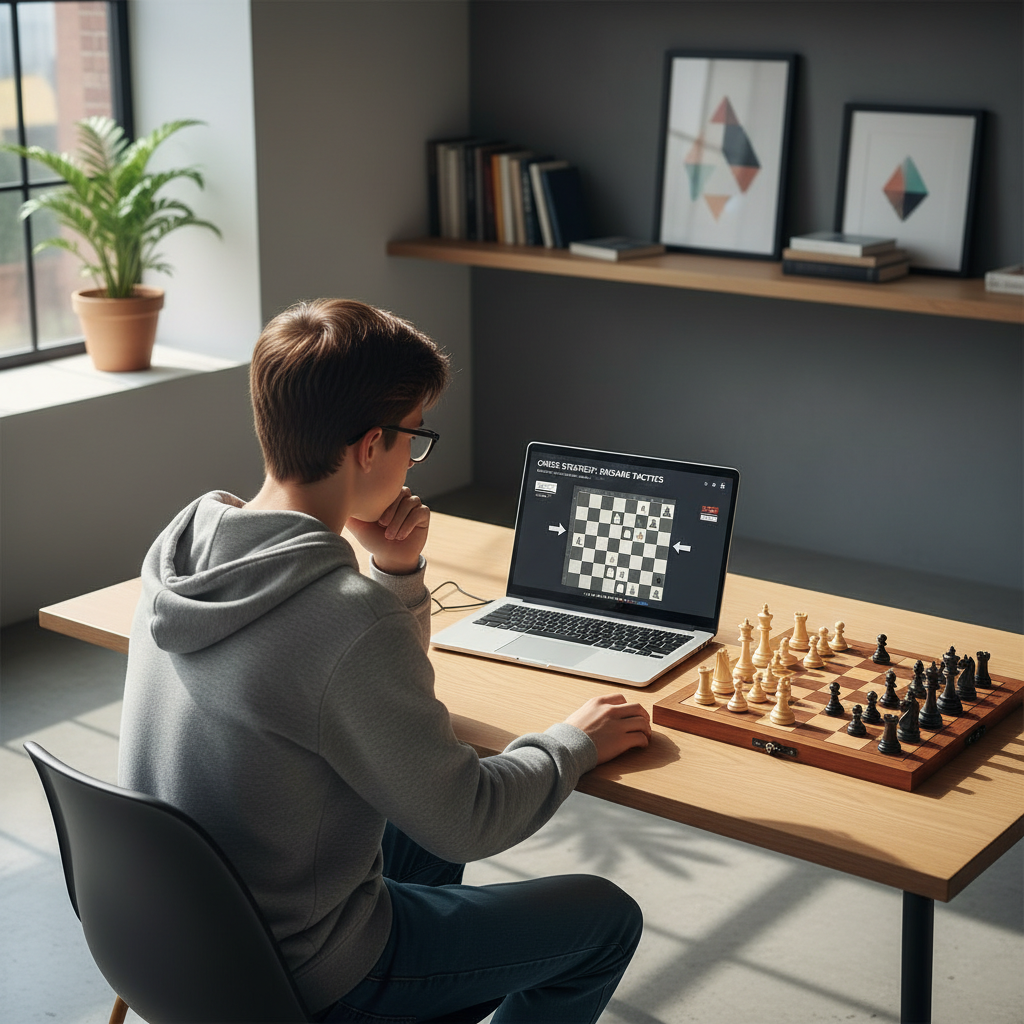
To effectively support child chess at home for parents who don't play, the most powerful tool you can provide is a structured fifteen minute daily window. This consistency is far superior to a single three hour session once a month. By making chess a brief but daily habit, you help your child maintain the mental sharpness they develop during our weekly junior chess club sessions.
Begin the routine with five to ten minutes of tactics puzzles. These are mini chess problems where the player is presented with a specific position and must find the single best move or sequence to win material or deliver checkmate. Think of these as the chess equivalent of daily arithmetic drills; they build the pattern recognition and calculation skills necessary for more complex play. Puzzles are the most efficient way to improve because they isolate critical moments, allowing the child to practice high level decision making in a condensed timeframe.
The remaining time should be dedicated to a single slow game. It is vital to distinguish this from "blitz" or fast games commonly found online. Blitz encourages impulsive, shallow thinking because the clock creates a sense of panic. Conversely, slow games allow a child the space to sit with a position, weigh multiple options, and anticipate their opponent's response. This deliberate pace is how children develop deep concentration, a core value of the Kingston Junior Chess philosophy.
As your child progresses and looks to refine their current schedule, you can introduce the 20-40-40 rule for their study time. This formula suggests spending 20% of their time on opening theory, 40% on tactics, and 40% on the endgame. For now, simply focusing on the routine below will provide a solid foundation for growth.
Duration | Activity | Focus Area |
|---|---|---|
5-10 Minutes | Tactics Puzzles | Pattern Recognition |
5-10 Minutes | One Slow Game | Concentration and Strategy |
15 Minutes Total | Daily Practice | Incremental Improvement |
By protecting this small block of time, you ensure that the expert coaching they receive has the chance to take root through regular, thoughtful application.
How to Help Your Child Analyze Games Without Knowing the Moves
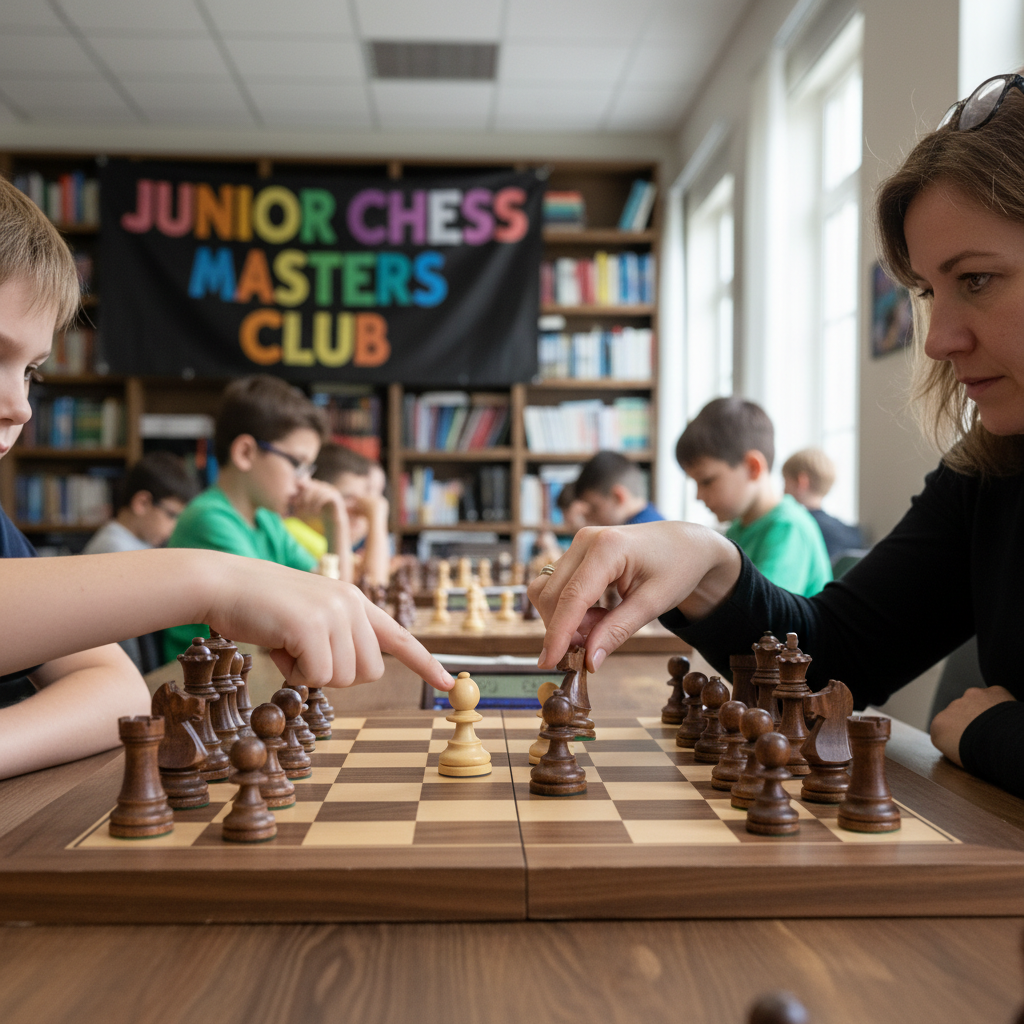
Once the fifteen-minute routine concludes, the final step is reflection. This is where you can most effectively support child chess at home for parents who don't play. You do not need to identify a blunder or a brilliant sacrifice to facilitate a productive post-game analysis. Instead, your role is to act as a sounding board. When a child explains their reasoning to someone who is not a chess expert, they are forced to simplify complex ideas and clarify their own logic; this process significantly strengthens their memory and understanding of the game.
During our weekly junior chess club sessions, our expert coaching focuses heavily on post-game analysis, as it is the fastest way to turn a mistake into a lesson. At home, you can replicate this by asking open-ended questions that encourage your child to verbalize their inner monologue.
Question to Ask | Goal of the Question |
|---|---|
Which move were you most proud of? | Identifies successful pattern recognition. |
Where do you think the game changed? | Highlights critical turning points and momentum shifts. |
What was your opponent trying to do in that position? | Develops empathy and prophylactic (preventative) thinking. |
If you could play one turn differently, which would it be? | Encourages self-correction and objective reflection. |
By prompting your child to narrate their strategy, you help them transition from impulsive playing to deliberate thinking. This verbal exercise bridges the gap between the intuitive moves they make at the board and the structured theory they learn during their lessons in Kingston. The act of teaching you why a move was made reinforces that knowledge in their own mind far more than simply moving the pieces in silence.
Safe Online Resources for Kingston Junior Chess Players
Digital tools are excellent supplements to our weekly junior chess club, providing a structured environment for the tactics and analysis discussed previously. To effectively support child chess at home for parents who don't play, selecting the right platform is paramount for safety and progress. We recommend ChessKid, the dedicated junior branch of Chess.com, and Lichess.org with its "Kid Mode" functionality enabled. Both platforms allow parents to monitor activity; ChessKid specifically offers a "Guardianship" feature where you can receive progress reports and restrict social interactions entirely.
Parents often ask about the appropriate age to begin formal digital practice. In Kingston, we find many children are ready around age five or six, provided the interface is intuitive and the sessions remain brief. While these platforms are excellent for solving puzzles, it is important to bridge the gap between the screen and reality. Encourage your child to set up interesting positions from their online games on a physical board at home. This tactile habit is essential, as it prepares them for the physical environment of our expert coaching sessions. By checking the current schedule and integrating these digital resources into the daily 15 minute routine, you provide a safe, modern path toward mastery.
Fostering Sportsmanship and Resilience at Home
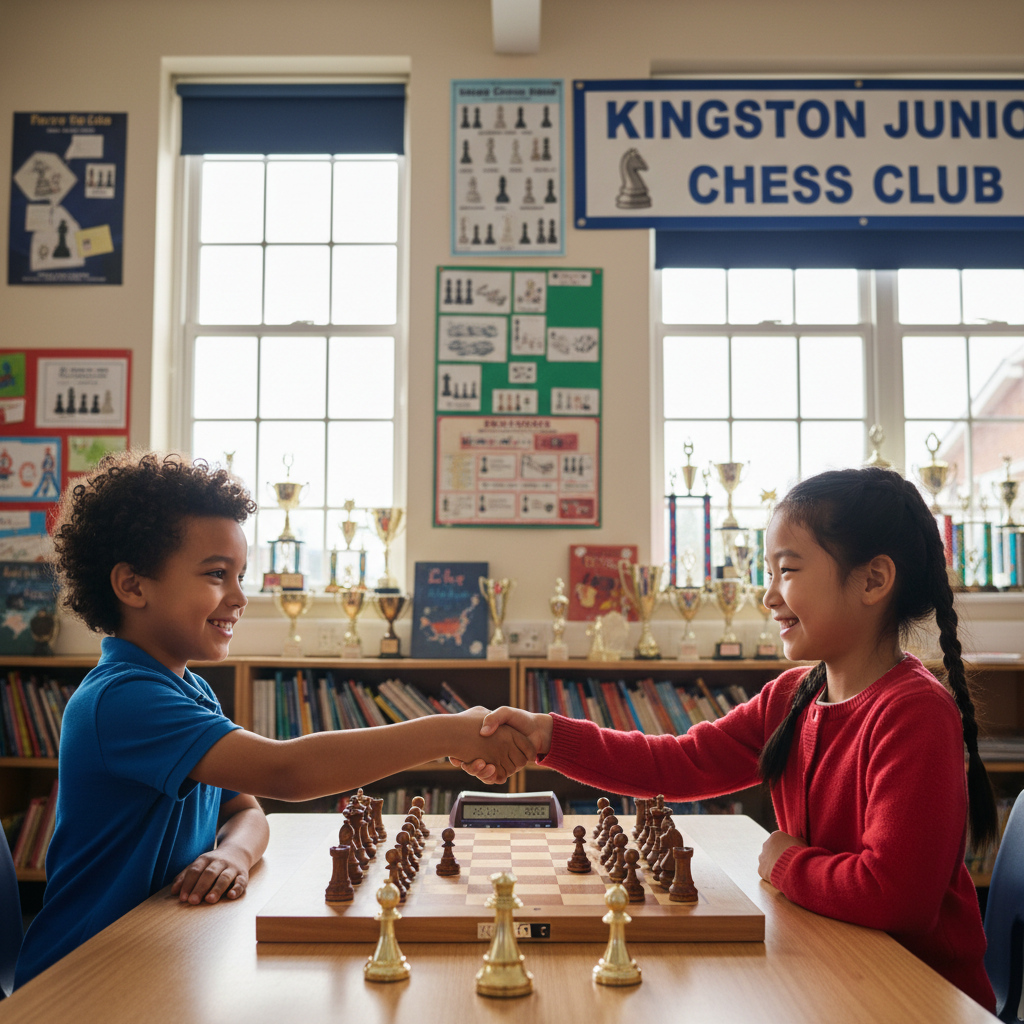
Beyond the digital board, the most critical way to support child chess at home for parents who don't play is by managing the emotional weight of the game. Chess is a uniquely demanding sport because there is no luck involved; every loss feels like a personal critique of one’s intelligence. At Kingston Junior Chess, we believe the chessboard is a laboratory for building resilience. Our philosophy emphasizes that a well played game ending in a loss is infinitely more valuable than a lucky win where the opponent simply made a sudden, unforced error.
Encourage your child to view their opponent not as an enemy, but as a partner in a difficult puzzle. You can reinforce this at home by praising specific efforts rather than the final score. Instead of asking if they won, try asking if they managed to use a tactic they recently learned or how they handled the pressure when the game became complicated. These questions shift the focus from ego to execution.
In our weekly junior chess club, we teach that the game begins and ends with a handshake. This ritual signifies respect for the shared intellectual struggle. By checking the current schedule for local tournaments and encouraging this standard of sportsmanship, you prepare them for the social realities of the game. Celebrating the courage it takes to lose and learn complements our expert coaching and helps kids develop the character required for long term success.
Frequently Asked Questions for Chess Parents
Navigating the early stages of a child's chess journey often brings up practical questions about balance and instruction. Here are some of the most common queries we hear at our weekly junior chess club in Kingston upon Thames.
How can I teach my child the basics at home? Focus entirely on the physical mechanics of how each piece moves and the concept of capturing. You do not need deep strategy for this; a simple rulebook or a basic introductory video is sufficient for the foundations. Once they understand how the knight jumps or how a pawn promotes, our expert coaching can take over the complex tactical development.
Why do children sometimes lose interest or quit chess? The primary causes are burnout and excessive pressure to win. To effectively support child chess at home for parents who don't play, keep the focus on the puzzle aspect of the game rather than the tournament standings. If a child feels that their worth is tied to their rating, the game becomes a source of stress rather than a source of joy. Keep sessions short and emphasize the social connections made at the club.
What exactly is the 40-40-20 rule? This is a training framework for improving players who want to move beyond the basics. It suggests allocating practice time according to the following ratio:
Component | Allocation | Focus Area |
|---|---|---|
Tactics | 40% | Pattern recognition and calculation |
Endgames | 40% | Precise technical play with few pieces |
Openings | 20% | Basic principles and the first few moves |
Balancing their current schedule with this ratio ensures they do not spend too much time memorizing openings at the expense of the endgame skills that actually win games.